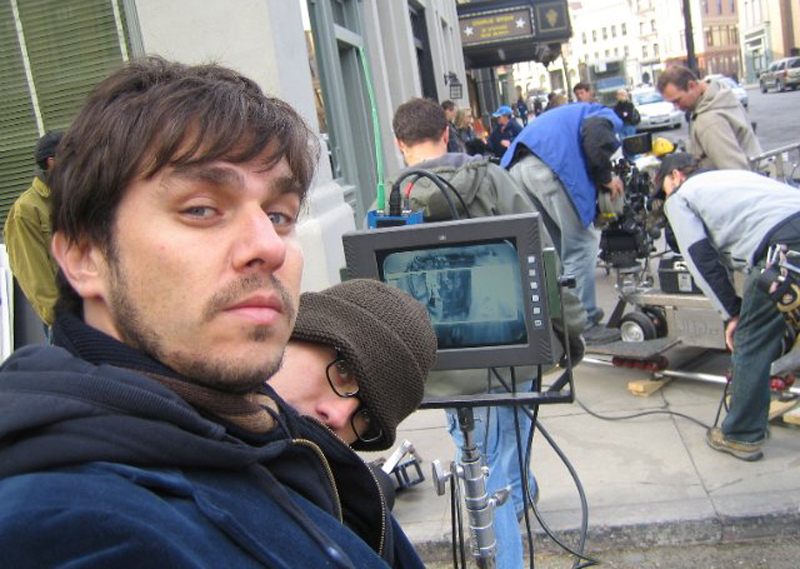

Ariel Vromen
"Melting The Iceman"
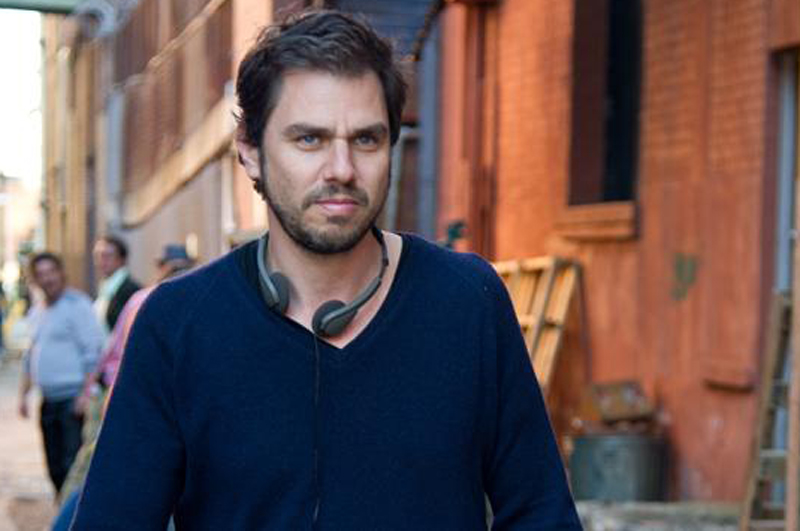
Israeli filmmaker Ariel Vromen got his start with the short film Jewel Of The Sahara. He has gone onto feature films with Rx and Danika. Now the 40 year-old hopes to make his mark on non-fiction with the thriller The Iceman, which stars Michael Shannon as Mafia contract killer Richard Kuklinski. It was asked if there was added pressure doing a movie based on real-life people and events.
“No, it was definitely not easier, because you have so many elements that you’re not allowed to tell and so many restrictions that you got to follow, especially for the people that are still alive,” Ariel explains, “Our luck was that most of the people are dead, so we can have a little bit of a creative room to either condense a few characters together or tell the story if the threat is coming from the Locasis and the Gambinos, we’re kind of like, ‘OK, we’re just going to narrow it down to Ray Liotta’s character, Roy DeMeo. But I think also the challenge of telling a story that happens in 20 years in three minutes is another challenge by itself.”
“And I think another challenge will be to stay honest to what the story’s about,” he continues, “And even if it’s a true story, it’s not about baseball. It’s about killing and being a sociopath and having that duality of two worlds, and then which story are you telling. Are you telling the story of the birth of a sociopath? Are you telling the story of the methodic of a sociopath? Whatever it is. We chose to tell the story of a relationship of a sociopath. It’s a love story, in a way, starting up on a date and ending with a sad goodbye.”
Ariel talks about how the relationship between Kuklinski and his wife, Deborah, played by Winona Ryder was crucial to the shape of where he wanted to go with the film.
“I think that’s the core of
Ariel Vromen
"Melting The Iceman"
“Again, so everybody has those kind of two sides in them that they need to feel, even Robert Davi’s angry when he’s being taken away from his family on Christmas Day,” Vromen adds, “So I think that kind of duality was something that we tried to portray, so Winona and Michael is the core, but then again, every other character, even Chris Evans’s character, he has that thing, even James Franco in this one scene, you see his son’s picture, and then again, he’s filming prostitution. So in every character, we try to keep the contrasts between these two worlds.”
We asked if there was any attempt at any point to stay away from the gay angle of the relationship between Roy DeMeo and Josh Rosenthal.
“First of all, Ray Liotta would not agree on that one,” he says, “He saw it as father and son. Me and Robert Davi, on the other hand, we agreed that there was something going on over there. And if you really watch the movie again, you’re going to see when Robert Davi’s character talks to him, when he’s asking to kill Rosenthal, he knows what’s going on.
Ariel Vromen
"Melting The Iceman"
“They didn’t want to go into that story, which it was not on the page as well,” Ariel continues, “So it was kind of like a little thing that Davi and I put in as a question of like people from the sides coming in watching these two guys, like, ‘What are they doing? A Jew and a mobster?’ And really, that was exactly the truth. So I think that brought it to an interesting angle.”
Ariel was asked if he was able to seek out anybody that was still alive as research for The Iceman.
“Definitely not the victims,” Vromen replies, “But a lot of the law enforcement people, yes, from the district attorney’s office that was prosecuting Kuklinski to the guy that arrested him, Dominick Polifrone, to Pat Kane in Jersey State Police as well, so there was a lot of research that was done by Anthony Bruno and Jean Tebow, they brought me that research and those connections.”
“We had no connection to the family while we were developing and shooting the movie,” he adds, “Although once we finished, his daughter Sally requested me on Facebook to be a friend. And I was like, ‘Wow, Mary Kuklinski, whoa.’ So I accepted and today, we’re on the phone quite a lot with both daughters and they saw the movie and loved it and all the family’s coming to the premiere in New York, so that’s exciting. And so, at least, we were not that far from the truth.”
Vromen elaborated on how much Kuklinski’s daughters liked the film.
“Again, could I show more violence at home, I could,” Ariel says, “If that would help the story to be a better movie, I don’t know, because I think you’re suggesting in a more metaphoric way, that it could be an explosion at home, that those plates could have been a punch in the nose or driving in
Ariel Vromen
"Melting The Iceman"
“And I think they did suffer some kind of a domestic violence, but it was not to the extent that it was unbearable, because obviously, the love that this family still has to Richard is insane,” he continues, “It’s amazing. Unbelievable. They’re not angry. Obviously, being lied to was the hardest part, but just as a person, just the other day was Kuklinski’s birthday. It was like all over his daughter’s Facebook, ‘My daddy’s birthday today and we miss him.’”
We asked Ariel to explain the film’s postscript that when Kuklinski goes to jail, he never saw his family again.
“Because the only person who completely didn’t forgive him and I guess went in more and more frustration towards her journey with him was his wife,” he says, “And she was the leader of the pack, so she didn’t allow his kids to go visit him at all. Although, in information that I just got in from his daughter, the last three hours of his life, when he was poisoned, Barbara and the two daughters went to the hospital in Trenton Prison and actually had a final conversation with him just before he died.”
“But no, it was not anywhere in all the interviews we saw back then,” Vromen adds, “In the HBO interviews back then, there was never a contact with him since the day he was arrested. Even in the court, they were devastated, crying, they were in such shock and there was no communication with him. I was like, ‘Is that true that you had never seen him?’ She was like, ‘Well, we had never seen him at all while he was arrested. But on his deathbed, they called us and told us he has a few hours and actually, apparently, all he did was kept on saying that he’s sorry. He tried to, I guess, move on with the
Ariel Vromen
"Melting The Iceman"
Vromen was asked whether or not he would go back and update the film with the new information he received.
“I tried to convince Millennium to open and pay for more cards,” Ariel answers, “And they said, ‘I don’t know about that.’ I don’t know, I think we’re going to let that go. By the way, there’s a certain impact about it. Maybe for the DVD, we will make something about new information, but I doubt we will be able to change it in two weeks. It’s out in theatres.”
We asked Ariel if he found it frustrating making a movie on real events, but having to find out that X, Y, and Z happened and it leaves him to be a big target for criticism.
“Totally,” he replies, “I cannot even tell you how many times, and you’re talking to somebody that lives with it for six years now, how many times people present me or say like, ‘Hey, this is the director of The Iceman.’ And the guy was like, ‘Oh, you did the movie about The Iceman? Let me tell you something about The Iceman. I know everything about him. You did this, you did that, and I’m just sitting over there listening and the guy’s like, ‘He killed those rats,’ and I’m like, ugh, this is such a lie. He didn’t do it. ‘And the fact that he did that and that.’ I’m like, it makes me happy and it also makes me sometimes wonder whether how this specific person is going to get when he’s going to come out of the movie. I can tell you, we did so many screenings of the film through the festivals and the special screening with it, even the people that really were savvy with all the documentary parts and read the books and knew everything, let it go and enjoyed the journey as another point of view of telling that specific
Ariel Vromen
"Melting The Iceman"
“If they know the story, they know everything, so if I’m trying to say, I’m usually finding myself like, wow, great, man, when is your movie coming out?” Vromen continues, “I hope you’re going to pay and watch the movie and call me after that or don’t call me. But listen, it’s exciting to see that you told a story about something that people have some kind of excitement about. It’s much harder to tell a story that nobody knows anything about and then, doesn’t have any opinion, so, at least, people have an opinion, people feel that they are being educated in certain levels, and they took their story out of The Iceman part, so this is my story.”
Vromen talked about his own path to filmmaking.
“Well, yes, I always had a Super 8 box camera,” Ariel recalls, “I think I made over 200 short films when I was a kid, but then, the army, I went into a combat unit, I was in the rescue unit of the Air Force, and that’s a lot of blood and death and saving people while taking lives, but it kills your creativity. It’s almost like a root canal, they’re taking all sources of creativity in you. Then, I went to law school and that also taught me a lot about research, but didn’t tell me anything about creativity. And then, I started going back to the source of doing music because I used to play the drums as a kid and I started doing electronic music, so I kind of zoned into the creative world, but I really wanted to be an editor and a sound designer, but I was not patient enough. I’m a very edgy person. I cannot sit in one place, I’m ADD, I need to do three things at the same time, and I was also very
Ariel Vromen
"Melting The Iceman"
“When I was editing a documentary mainly and I kind of like directing the movie more than editing them, and I was like, ugh, why didn’t I shoot this one?” he continues, “Or why this director did this? And I cannot listen to this director. So my very good friend, who gave me my first job as editing, now is my editor, told me like, ‘Dude, you should go direct. You should try it. If you have so many complaints about what you’re doing, do something else. And he cursed me and he made me go into that journey of a director. But anyway, it’s the best thing that ever happened to me in my life and I’m very grateful that I can be here with you guys and telling you these stories and have a voice with something that you’re craving to have when you’re a filmmaker, for people to listen to you, and wondering what’s in your mind, and why you’re making what you do, and hopefully, this is my third film and it’s not going to be the last.”
We asked Ariel if editing Ray Liotta’s scene of being killed and put in a trunk was the last thing to go.
“We didn’t put it in,” Vromen reveals, “It actually was one of the first things to go in my cut. One of the reasons we took it out is because, (a), it was not clear whether it’s Kuklinski killing him or not, and the way we shot it because the truth of the matter, he didn’t kill Roy DeMeo. It was actually completely different, but we wanted to kill to keep that tension that this is his mission, but I couldn’t. Again, true stories have restrictions. We knew it was not him, so how do we, telling it thematically, that’s it’s Roy DeMeo being killed, but it has nothing to do with Kuklinski, so then, it’s kind of almost an anti-climactic moment.”
“So you’re
Ariel Vromen
"Melting The Iceman"
Asked of Vromen was whether he finds shopping films at festivals to be filled with pressure, considering most of the reviews would be written at that juncture.
“I did very few festivals with my other films, so, obviously, for me, a more extensive,” Ariel says, “Producer [Ehud] Bleiberg, I think, did every festival in the world before, so he was more experienced to tell me like what’s the experience of doing that. I must tell you, it can be very stressful, but it’s also amazingly rewarding to be in Venice and in Toronto and Telluride and we did so many festivals. And sometimes, it’s great to go into this remote place, to Sonoma, to Vail, to Sarasota, I went to small towns in the States and you’re with an audience of 700 people enjoy your movie and they’re like, ‘Wow, that’s great.’”
“Those are people that are like the real audience,” he continues, “So it makes me come here and to this day a little bit more relaxed, a little bit more confident, and less nervous. You don’t see my eye tweaking and I’m not having an anxiety attack of like, please write good because I’m going to die. And again, it’s
Ariel Vromen
"Melting The Iceman"
We asked Ariel about the casting of the film, including James Franco in a single scene.
“Well, it was a script that eventually attracted everybody and it’s Michael Shannon,” he says, “So if you have a good script and you have Michael Shannon, then it’s kind of like you have the perfect kinetic energy to bring everybody else onboard. So I think the casting process with this movie was insane. We started with James Franco, Benicio del Toro, and Michael Shannon. And then, Michael had to push a year because of playing Superman, Boardwalk Empire, then James couldn’t make it, and Benicio had to drop for Savages and blah, blah, blah. There was all those elements that were starting to fall apart, and then you try to keep new fresh ideas to the table, and you don’t have much money to offer to those actors because it’s an independent film.”
“So at the end of the day, I think it’s kind of beautiful to see when you’re in a process and nothing works in your direction and nothing works for our direction in this journey, it’s actually a good time,” Vromen adds. “Because at the end of the day, I wouldn’t have replaced Chris Evans with James Franco for this role and I wouldn’t have replaced Ray Liotta with Benicio and I wouldn’t have replaced Megan Jane Hall with Winona and I defiinitely wouldn’t have replaced Michael Shannon, so it was kind of like, this is the magic. Things are not happening
Ariel Vromen
"Melting The Iceman"
Vromen was asked how James Franco went from the star to a cameo role.
“He was such a good friend with Michael and he felt so bad that he couldn’t make it,” he says, “So I guess he came to support us and obviously, it was a very nice gesture of him to just be part of it. And again, you’re right, like everybody wanted to be a part of something.”
“And in fact, James, I kept on hearing from him more and more about what a great experience he had, even if he had just spent a day on set,” Ariel adds, “But he was like, ‘Wow, that film. We’re really doing something special.” And he’s going to see the movie for the first time in New York, and here we go.”
We mentioned how hard it was to recognize the cast underneath all the 1970’s hair and fashions.
“Well, it’s a trick, really,” Vromen says, “I’m not the first one to do that. In Argo, you didn’t recognize Bryan Cranston. It actually gives an actor more freedom because they can be outside themselves for a second, so they can get out of their comfort zone, and actually be somebody else and pretend. It’s not about being good looking, it’s about being good performers, so it’s cool that you come and dirty up those guys.”