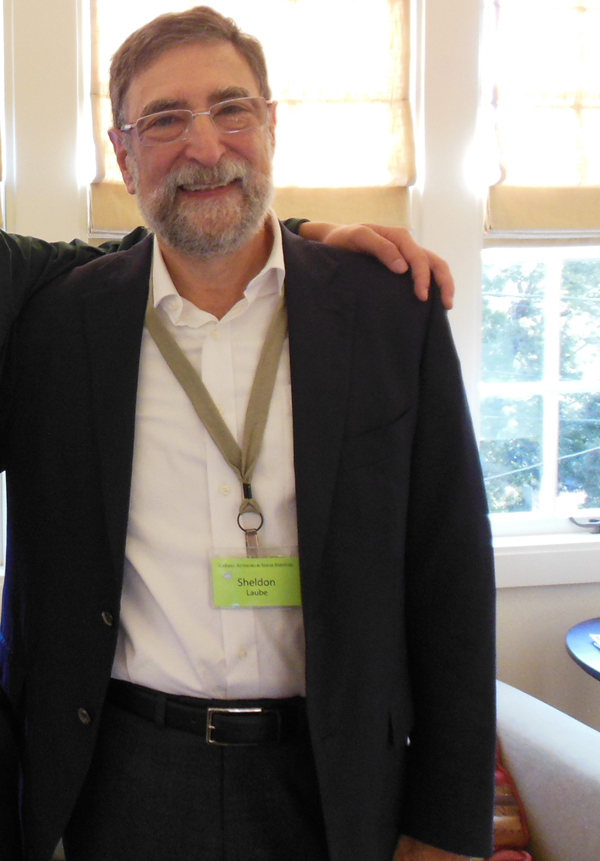

Sheldon Laube
"You'll Get a 'Kick' Out of This Art"
Over the past four decades, Sheldon Laube has co-founded four successful startup companies in the ever growing technology space.
The first was a software consulting firm that he built from his dorm room while still attending college.
His talent and expertise in the tech space also brought forth several opportunities in large corporations, including; PricewaterhouseCoopers where he first served as Chief Information Officer for ten years and then later as the Chief Innovation Officer, as well as Novell where he was both an Executive Vice President and their Chief Technology Officer.
Among others, Laube co-founded the Consumer Financial Institute, a company which produced individual personal financial plans using artificial intelligence (AI) technology in the 1980s, and CenterBeam, which developed a new approach to the support of personal computers within corporations.
To say that he knows his stuff would be an epic understatement.
His newest venture, although certainly based in technology, also touches upon something else, an area that he has spent his entire life appreciating; art.
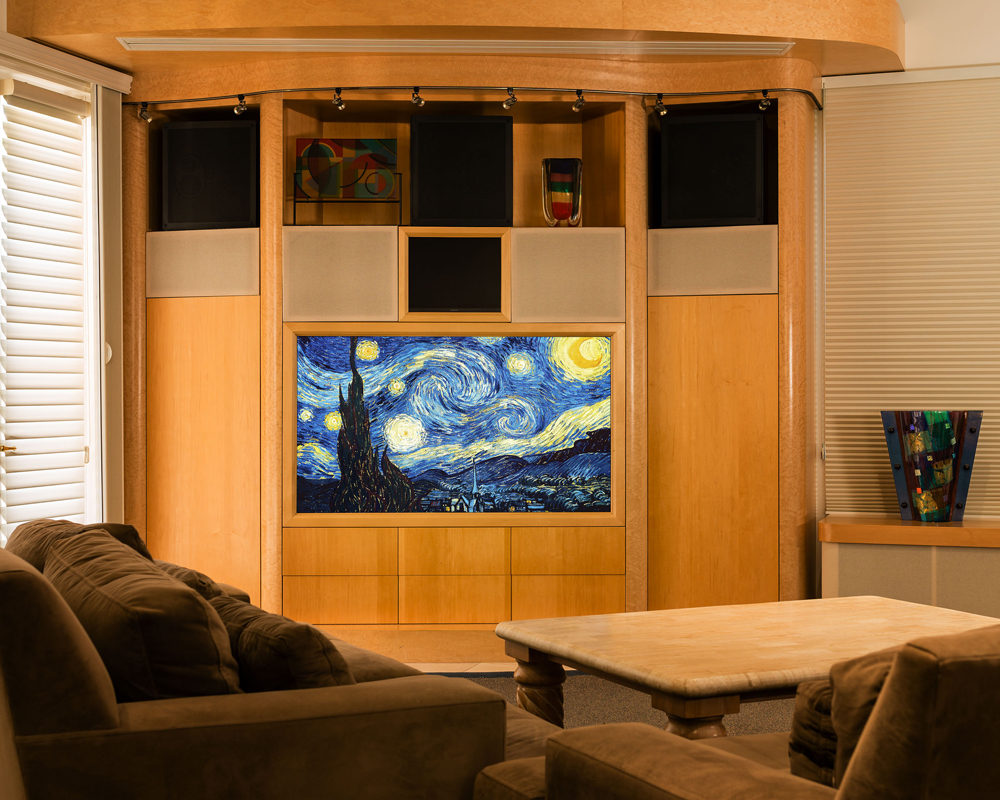
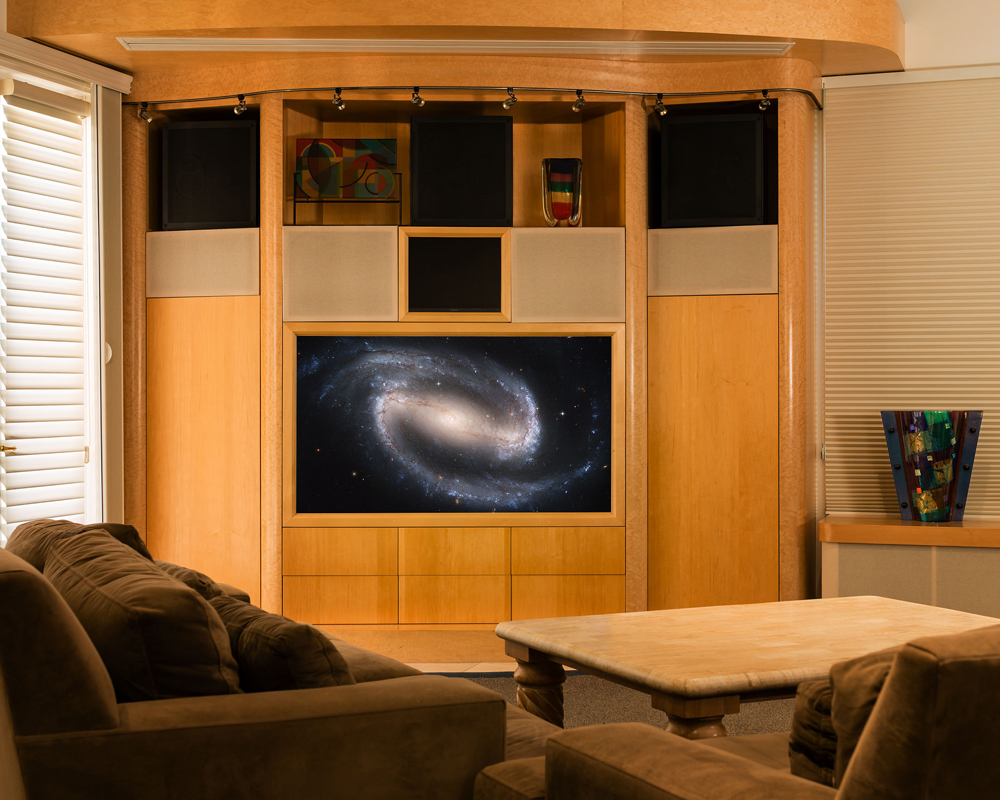
Artkick is an Internet application which distributes art and photographs the way people listen to music through software like Pandora or Spotify.
Laube told us about how he got to where he is today with Artkick.
“I’ve been an entrepreneur all my life,” Sheldon says, “This is the fifth company I’ve started, the first one in a proverbial college dorm room that did software consulting. But without question, this is the most exciting. I’ve been involved in technology my whole life, but as a kid, my aunt was a contemporary artist in the 1950′s, and she painted. She did abstract paintings, and I would remember as a little kid, I don’t know five or six years old, I would actually watch her paint. And she did these really abstract things. And I remember saying, her name was Manya, and I say, ‘Aunt Manya, what is that?’ And she’d say, “Well, what do you see?’”
“And so, I’ve had an appreciation of art my whole
Sheldon Laube
"You'll Get a 'Kick' Out of This Art"
Sheldon, then, told us about how he started up Artkick.
“Artkick started almost a year ago,” he says, “I went to a lecture with my wife, and my wife is a fine art photographer who sells photography. And it was electron-collecting art, at one of the museums in San Francisco. There was a curator there and a gallery owner and a collector and they were all talking about art. And as they were busy talking, I got up and asked a question. I said, ‘What’s the impact of the Internet on all of this?’ and they all said, ‘Not much.’ They said, ‘People are going to come in. No one’s going to buy a great photograph without coming in and seeing it,’ and that’s, of course, a strange idea because there’s millions of dollars transacted on the Internet and people are buying all sorts of art. But it just leads me to a completely different thought.”
“I have a niece and nephew who live in Silicon Valley and they’re in their thirties and they’re both in the high-tech industry,” Laube continues, “And I said to myself, ‘You know, they barely know what a CD is.’ When they buy music, they buy it
Sheldon Laube
"You'll Get a 'Kick' Out of This Art"
We asked Laube what he would say to people may still be concerned that still images on their flat screen could be stuck on their flat screen TV.
“Yes, the idea of what’s called ‘burning’ and you’re worried about, ‘The picture’s going to be there,’ and you turn it off and the picture’s still going to be there,” he says, “It’s really fixed. Ever since the days we got past plasma TV’s, all the new LED and LCD TV’s don’t have that problem, so that’s never really an issue. Internet connectivity is now like 70% of the households in America. We connect all that up and that lets us make Artkick. More interestingly is one of the things you already said, that you get to change it. One of the cool things about Artkick is you get to change the art whenever you want. Now if you think about it, art is very strange. It’s permanent. In other words, you buy a picture, you put it up on the wall, and for all intents and purposes, you never change it, because you take it down, there’s a hole in the wall and you got to patch it, it’s all too much, right? But, of course, if you step back, that’s completely unnatural.”
“Everything else you do, you make decisions and choices and change,” Laube continues, “You get up in the morning, you decide what clothes you want to wear, you decide what you want to eat at lunch, you
Sheldon Laube
"You'll Get a 'Kick' Out of This Art"
We brought up to Laube the comparison between having a tattoo, which is permanent, and a henna tattoo, which is gone in a matter of days.
“That’s a great analogy,” Sheldon says, “I never really thought about Artkick and tattoos, but it’s the same thing. This notion of permanence, if you can have the experience, like a henna tattoo or a temporary tattoo, it’s great. Because then, you say, ‘Hey, I don’t like it.’ If you like it, you just leave it there.’”
“And once you realize that,” he adds, “And everyone, no matter who you are, no matter what culture you come from, the notion of decorating your space is core to the human experience. Cave people decorated their caves. The earliest paintings go back 40,000 years, so there’s a core desire of humans to decorate their space. We all make art as kids, so it’s one of the core human things that people do, but what you want
Sheldon Laube
"You'll Get a 'Kick' Out of This Art"
Sheldon talked about the selection that the Artkick app has to offer.
“We offer over 50,000 images, fine art from over 2,000 museums, thousands of photographs of everything from travel photos to fish to space photos, whatever you can imagine, we have in our library,” Laube reveals, “And we’re constantly adding, so that no matter what, you can find what you like, even if you don’t know and that’s the whole point.”
“Art and all of the arts, music, visual, they are designed to enrich people’s lives, and that’s why humans do it,” he continues, “Art enriches your life. But what you’re into on Monday is different than Tuesday, and that’s what Artkick is able to do for people.”
We asked Laube how the attention-deficit-disorder generation would respond to Artkick well-enough that they would sit down and let one image tell the story.
“Absolutely, that’s true,” he says, “But to be honest, I leave that for people to discover. When you’re teaching kids about art, you can drag your kids to a museum and make them look at a picture, but what we found, and we’ve heard this from a lot of the people that are using Artkick, that by just having it on as part of the environment, kids walk by and sometimes they walk by, they don’t care about it.”
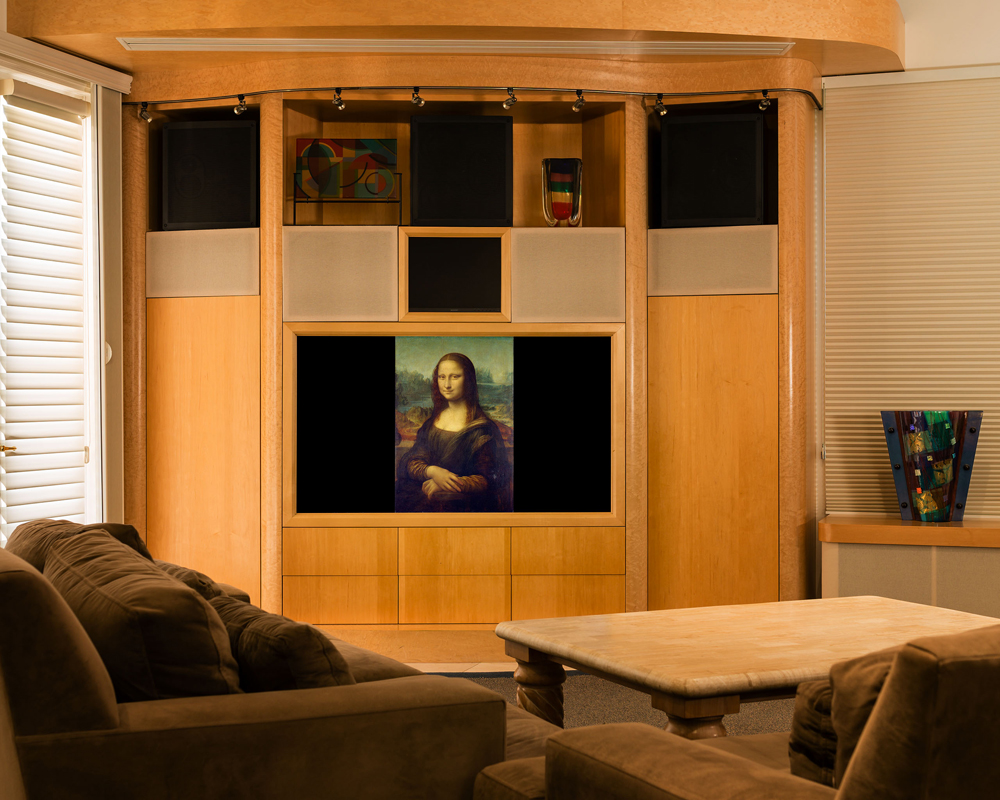
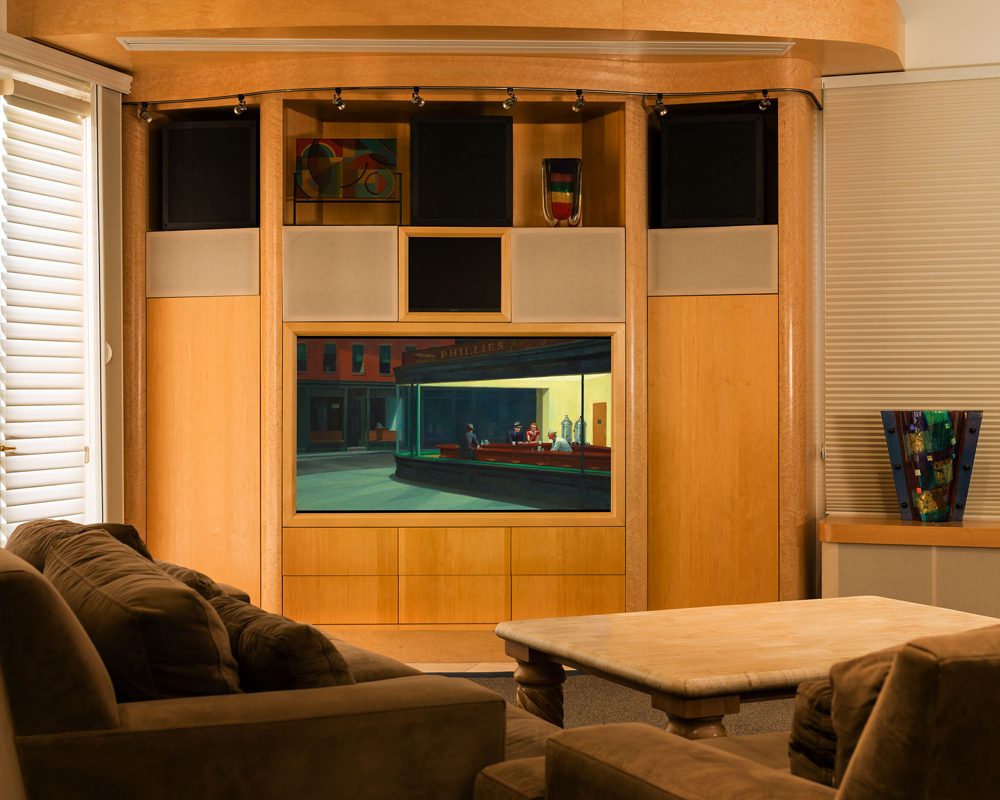
“But occasionally, they’ll stop and say, ‘Oh, hey, that’s a really interesting picture,’” Sheldon adds, “That’s the way you build an appreciation, that’s the way people change is by exposing to it, but not by beating them over the head. Why not turn the black eyesore of your TV into a beautiful picture?”
We interjected to Sheldon that such easy access to generations of priceless works of art that would normally be impossible to collect the might
Sheldon Laube
"You'll Get a 'Kick' Out of This Art"
“It’s both amazing and some of the images which took enormous work and some are photographs that took a second,” Laube says, “What’s important is that they evoke emotion in front of you. When you see something you like, it interests you. You ask, ‘Can I see more like that?’ And that’s what’s so cool about this world of the Internet and what we can do. People who don’t even know what Impressionist art can be curious enough to learn more about other works of it, especially if you didn’t know what Impressionism was. What’s so neat about it is because it’s the Internet, like music, you can juxtapose things that didn’t exist in real life or were too hard. For example, you can take any artist that we have in Artkick and thumb through their images, and one of the things that’s interesting is you look at where are these actual pictures.”
“Well, one might be at the Louvre or one might be at the Armitage in St. Petersburg and one might be in New York, and you suddenly realize that as you look at thirty or forty of these, it would be impossible to see them in life, in the same space, because they are scattered across the world,” he continues, “We bring collections together in the virtual world that don’t exist in the real world, and that allows you to see them in a way you can’t even do unless you were incredibly rich and have a lot of time and want to fly from St. Petersburg to London to Berlin to New York, and you can do that in ten seconds with Artkick, and that’s pretty cool.”
We asked Laube how many flat screen TV’s and how many different images can go in what screen can be
Sheldon Laube
"You'll Get a 'Kick' Out of This Art"
“One of the cool things is they can all be the same, they can all be different. So you can say, ‘I want the same image everywhere,’ or, ‘Maybe today, I’m having a party, and what I want are pictures of the West,’” Sheldon says of it, “And so, each of the five screens, one’s in the kitchen, one’s in the family room, one’s in the bedroom, people wander around the house, they get different great images of the American West. The whole point is you can match the images to the party. You want an evening in Paris; you can have pictures of Paris suddenly appear.”
“Or if you’re in the middle of the party, you can say, ‘hey, let’s go look at French Impressionism,’” he adds, “It’s like what people do with music. What happened was when we first started having digital music and people would go to parties, or even I remember, people would bring their CD’s, or even, if you’re really old, they brought their 45′s and they would have parties and people would listen to different records. Well, now you can do that with the images.”
Sheldon then got into the cost factor of Artkick.
“Artkick is what’s called a ‘freemium’ business model, so it’s things like Spotify and Pandora for music,” Laube explains, “The basic service is free, anybody who wants to use Artkick right now can go to the App stores, either Google or iTunes, and download it onto your phone or tablet. And with an Internet-connected TV, you can now put images up on your TV’s, all for free. Now this year, we’ll introduce a premium service that will cost somewhere between five and ten dollars a month, and that will unlock new features. One of which, interestingly enough since you brought it up, is the free service lets you watch on one TV.”
“If you buy the premium service, you can watch on any number of
Sheldon Laube
"You'll Get a 'Kick' Out of This Art"
We pointed out that the benefit of something like Artkick is that compared to buying physical reproductions of art that go between $20-$50, plus the cost of framing it, all that cost is pretty much eliminated by having a piece of art on your TV screen.
“The thing that’s crazy, we’re here at CES saying all this, is the cost of electronics continues to plummet,” Sheldon says, “An amazing fact for you, think about a 30″ picture, the cost of an Internet-connected TV is about the cost to frame a 30″ picture.”
“For what you would pay to frame that reproduction, you could have an Internet-connected TV that would be a window onto thousands of images,” he continues, “We think that’s going to change people, because what they are going to do now is they’re going to buy this flat panel just to show off. Not only does the Super Bowl look good at 70 inches, but art looks really good.”
We asked Sheldon about the quality of the images you get off of Artkick.
“Well, they are high-definition images,” Laube replies, “Two other things are really happening, the first of which is that in most homes, art doesn’t look very good because it isn’t lit. TV’s are backlit; they generate their own light, so they look really terrific. In your own home, you
Sheldon Laube
"You'll Get a 'Kick' Out of This Art"
“No one will make the argument that listening to a piece of music on an IPod over $10 ear buds is equivalent to a concert, but you know what, millions of people still enjoy it,” he continues, “Seeing art in person is wonderful, and if you can, that’s great, but seeing it on your wall is pretty wonderful also. They’d most likely never be in your house ever otherwise, great art that costs millions of dollars.”
We asked Laube to talk about the initial excitement, navigating, and financing an idea like Artkick successfully now versus during the initial Silicon Valley boom.
“Well, success we will see in the future as people use this, so the jury is still out,” he reveals, “We just launched Artkick, it’s brand new, so I’m pretty excited about it, it’s an amazing product. Things have changed. As I said, this is my fifth start-up. I’ve been doing this a long time. What always stays the same are great people and that hasn’t changed at all. When you have an idea, you want to surround yourself with great people who are incredibly talented. If you’re starting a company from scratch, you’re going to be working like crazy, and what you want, and I particularly do, is to be working like crazy alongside people you like. It’s as simple as that. You talk to a lot of start-up CEO’s, they say that you want to work with people you enjoy being with. What’s cool about having done this before is over the years, you build a network of people. I had the original idea almost a year ago and I reached out to some friends I’ve worked with. The first thing is you have this idea and you convince yourself it’s a
Sheldon Laube
"You'll Get a 'Kick' Out of This Art"
“All that infrastructure is available essentially for free to start and you can scale it user by user for pennies, so you don’t have to have that capital investment,” Sheldon adds, “You can build this entire infrastructure out on the web on the Internet with no money up front. I can turn on this incredible infrastructure for $30 or $40 a month and I can just add in chunks of that unlimitedly, no matter how big I get, I can add chunks of $30 a month. It means anybody young or old can build some very sophisticated value with no upfront investment. The tools to allow you to build applications for smartphones are incredibly sophisticated, but many have gotten simpler and simpler to use. So it’s become much easier to build great applications with much less capital intensity up front. The third thing that’s changed is the nature of venture capital and the funding of it has dramatically shifted. Because the costs of putting something together have gone down, the venture community expects you to do it yourself. My previous two start-ups were funded on an idea, today, no one funds ideas. They say go build it, because
Sheldon Laube
"You'll Get a 'Kick' Out of This Art"
We pointed out that in today’s world, it seems investors are more reticent to come on board to an idea, unless there’s practically no risk left at all.
“I don’t think that’s quite fair,” he contends, “Investors, certainly venture investors and venture capitalists, take tremendous risk. Artkick is a great product, but there’s still risk. Can we build enough audience? Can we monetize it? Can we convince enough of the people, since it’s a ‘freemium’ model?”
“The basis is, well, if we can get a million users, 100,000 of them are willing to kick in for the extra features,” Laube adds, “Well, if they are not, sooner or later, even at $30 a month, it keeps scaling and that gets to be $3,000 a month or $30,000 a month, you better get some income, so there’s still risk there.”
We asked Laube if there is difficulty making a good idea stand out because there are so many ideas out there.
“No, there’s always been many, many great ideas,” Sheldon believes, “There are smart people all the time. Maybe we feed them better, so there are more smart people, but they’ve always been incredibly smart people with great ideas. I think what you’re really seeing is it’s easier for people to instantiate their vision, in other words, go from an idea to something real, so there are a lot of products out there. Just look at the millions of apps in the App Store as a proxy for creativity, and then, more and more everyday. It’s always hard to stand out, whether you’re making a movie or writing a book, that’s always been the issue of how do you get people to hear your
Sheldon Laube
"You'll Get a 'Kick' Out of This Art"
“The whole notion of social media, you can have ‘viral adoption’, you don’t need a major news network to cover us, because if enough people virally hear about it and share it on Facebook, that’s enough,” he continues, “While more and more people try to rise out of the noise, there are more and more techniques that allow even nobodies to suddenly become somebodies. Just look at [South Korean pop rapper] Psy, all of a sudden, he’s a global sensation. I’m sure he didn’t spend a lot of money putting the “Gangnam Style” music video together, yet he’s now an international phenomenon because he had talent and he struck a chord and people loved it. It’s so cool than an unknown can tap the imaginations of millions and all of a sudden go from obscurity without a major label. That doesn’t mean the major labels don’t still have a place and they are still very important, because he’s sort of the exception, not the rule. But it certainly gives all us little entrepreneurs hope.”
We asked Sheldon about his own favorite works of art or photography.
“I found this American artist named Alfred Bierstadt,” he answers, “He paints The American West in the late 1800′s. I just love looking at them. They are just really terrific. I don’t think I’ve ever even seen a picture by this guy, and I was like, ‘This is really cool,’ so I like those. We have a whole collection of natural phenomenon, so those are like thunderstorms and waterfalls and they’re just gorgeous, and the third are space, images from the Hubble telescope.”
“But what struck me, now that I have all this and spending this time, is there’s beauty in everything,” Laube adds, “We have 600 insects, they’re gorgeous, fish, anthropoids, mammals, we
Sheldon Laube
"You'll Get a 'Kick' Out of This Art"
We pointed out that with Artkick, Laube can contribute to making the modern world more cultured.
“We like to say they’re enriched,” Sheldon states, “It’s brought joy to them. I don’t need to culture anybody, but if I can make you happy because of some beautiful images there and you smile a little bit more, what more can one ask?”
Being that we at the Source are first and foremost devoted to the art of film, we had to ask Sheldon about his Oscar predictions.
“What do I know?” Laube replies, “I happen to like to go to the movies. I think Sandra Bullock in Gravity was just unbelievable. We didn’t even want to see it. My wife says, ‘You sit there and you watch one woman for two hours lost in space, how interesting can it be?’ We were blown away. It was just an amazing movie. I loved it, and she’s just so wonderful.”