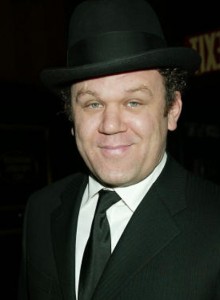
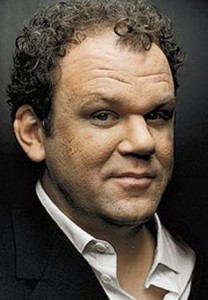
John C. Reilly
Over the years, John C. Reilly has continued to prove himself as one of the few actors equally skilled at both comedic (Talladega Nights: The Ballad Of Ricky Bobby, Walk Hard: The Dewey Cox, Step Brothers) and dramatic acting (Gangs Of New York, Chicago (which garnered him a Best Supporting Oscar nomination), The Hours). Now, Reilly has gained the rarest of opportunities, to take his comedic skills into a realm that often completely blurs the lines between comedy and drama with the comedy Cyrus.
The 45 year-old first revealed how his character of John of the film was tailor-made for the actor’s uniquely dramatic style of comedy right down to sharing the same first name.
“Well, you definitely pay attention when somebody says that, like we wrote this role for you,” John says, “Of course, a lot of people say that when they didn’t, really. But these guys, [writer/directors Mark and Jay Duplass], I knew they did because my wife is friends with them and she met them at some film festivals and she had seen The Puffy Chair way early on and she brought it home for me to watch and I was like, that’s amazing. And I sent word back to them, I’d love to do something, let’s find something. And then, we met and they said, ‘Yeah, we wrote this part for you and we really hope you want to do it, because if you don’t want to do it, we’re not going to make this movie. We’re going to make something else because at this point, we can’t stand to see anyone else. It’s not like we could just switch you out with another actor.’”
“So I was really flattered and I really drawn to the way they liked to work,” he adds, “The tone of The Puffy Chair and Baghead and allowed the actors to improvise and not just to be funny, which I’ve been doing a lot of improvisation lately where the
John C. Reilly
John’s character is a middle-aged divorcee who falls for a woman, played by Marisa Tomei, and in the process, must contend with her fairly joined-at-the-hip son, played by Jonah Hill. He explains how his on-screen chemistry with Hill contributed to the dysfunctional relationship between John and Cyrus, Hill’s character, in the film.
“Yeah, it’s just this kind of uneasy thing,” Reilly says of it, “It’s funny because Jonah is a clever actor. So when he’s doing all that stuff in the beginning where it’s almost like this game of chess between us. He makes a move and like if I make this other move, am I going to leave myself open in some other way for him to stab me in the back, so yeah, it’s a hard thing. It’s very common, too.”
Reilly learned of just how common the triangle between mother and son and new boyfriend really was when he took the film to the Sundance Film Festival.
“When we took this movie to Sundance, this young guy was driving me around and he was in his twenties and I said, ‘What do you think of the movie?’ and he was like, ‘Yeah, I think a lot of people my age are going to relate to this movie,”‘ he remembers, “And I was taken aback for a second and I thought, wait, I was thinking like, you’re so young. I was thinking from my own character’s point of view, it was about people four years old trying to find a relationship.”
“And he said, ‘No, my mom and dad are separated and there were many times when I would come home from college and my mom would be having a guy over and we’d be sitting there at the breakfast table, because that’s where we lived,” John
John C. Reilly
It was asked of John whether he is as much of a the third wheel for Molly, Marisa Tomei’s character in the film, and Cyrus as Cyrus is with John and Molly.
“I guess so,” Relly replies, “But she’s not picking things out of my food for me and yeah, we’re not in the shower together.”
Reilly explains this odd scene, as well as how the John/Cyrus relationship, as well as the spontaneous directing style of the Duplass brothers, contributed to not only making the movie funny, but also realistic.
“They weren’t in the shower together, but she was in the shower and he went into the bathroom,” John says, “No, it didn’t go there. She’s so creeped out by the very idea. On the face of it, there’s nothing wrong, they’re close in the movie, but that’s not necessarily a bad thing. The problem comes in the fact that he can’t allow her to have another relationship. That’s the dysfunction. That he cannot allow anyone else to get close to his mother, so I don’t think I’m a big fan of close families. Everyone’s flawed in the movie, everyone is, like in life. But what’s interesting about these characters is that none of them are mean-spirited, although some of the things Cyrus does are deliberately mean, but for the most part, even the weird, dysfunctional stuff that the people are doing is because they want love. They are desperate for love. This guy is so lonely that he crosses boundaries that he
John C. Reilly
“So I think that’s really true,” he continues, “These aren’t like cartoon characters. They are very relatable. They’re flawed and no one is always right and always wrong. I think this movie is really refreshing in that way. I mean, the guiding principle, I think, that Mark and Jay had was have it not feel like a movie. Anything that seemed too rehearsed or manipulative or too much of a canned idea, they were like, ‘No, no, no, let’s just see what happens. Let’s see what really happens.’ So I think the movie feels really original for that reason. I think in a summer that’s filled with pyrotechnics and sequels and stuff that’s not so relatable to real life, this movie might find an audience, people that are looking for something a little more honest.”
John also says the film’s almost entirely improvised dialogue also contributes to the realistic acting of the three of them in the film.
“I would say, and maybe I’m wrong, because I’ve only seen the movie twice, but at least 80% of the movie dialogue is improvised,” Reilly claims, “We were using the script as a guideline a lot of times. We were using it as, well, this is where we’re going to end up. This is what happens in the scene, they wake up and he has to go to work or whatever it is. So a lot of it, the vast majority of it is improvised. And I would say probably 90% of the movie is the first or second take.”
“We didn’t do a lot of takes and the a lot of the best stuff in the movie, we didn’t rehearse, we didn’t meet beforehand, really, other than a couple of conversations,” Reilly adds, “So what you see in the movie
John C. Reilly
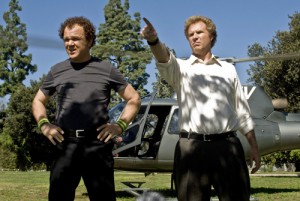
Reilly explains how this style of filming a comedy is different from the more polished Hollywood fare he’s worked on with Will Ferrell.
“Well, it’s different,” John says, “On those movies, we all collaborate on the script and trying to get a funny version of the script. We try to do the script a few times, especially with a joke or saying something funny. Once you say something funny and you do something twice, you’re not really surprising the other person anymore.”
“Especially Will and I, we were trying constantly to surprise each other with the next thing we’re going to say because of that kind of carbonation that happens when you’re about laugh when somebody says something unexpected,” he continues, “That’s what you’re really looking for with comedy. That’s why this movie feels the way it does and why it feels so sort of brutally honest is that it’s different, it’s different than a lot of movies that are made.”
Another thing that John says contributed heavily to the film’s realism is it being shot in sequence, which contrary to popular belief is a very rare occurrence in filmmaking.
“I always ask to shoot in sequence,” he says, “I always ask people to do that, unless it’s a movie where the timeline, there’s huge gaps in the timeline anyway. Location is the big controversy. It’s tough to ask a producer, we want to use this location because it’s at the
John C. Reilly
“But they did it on this movie,” John continues, “These guys, they had a real commitment to being able to, if something changed in the story, they’d wanted to be able to go back and they wanted to be able to do things in order because they felt it was important for the organic growth of the story and the characters and we did. We had like three or four locations at our disposal at all times and we just kept moving around in the same neighborhood that’s not far from where Mark and Jay live.”
John says that unlike their characters for much of the film, he got on well with his up and coming co-star.
“We did,” Reilly says, “Jonah’s a similar kind of guy. He’s up for the game.”
Reilly says his constant switching from comedic to dramatic to somewhere inbetween is not so much to keep his performances unpredictable with the public, but to keep his desire to act alive.
“I just sort of keep changing it up,” he says, “People, it seems, are going to be sensing what I am trying to do next. I got to subvert that and also to keep myself interested. I’ve been doing it for quite a while now. This is probably close to my fiftieth movie, so you have to keep changing it up to keep yourself interested.”
Finally, John reveals the next films he is working on.
“I have two movies in the can,” he discusses, “One’s called Cedar Rapids with Ed Helms and Anne Heche. That one is directed by Miguel Arteta, who did the The Good Girl. I have very high hopes for it. I haven’t seen it yet.
John C. Reilly
“Then, the other thing I just finished is We Need To Talk About Kevin and that’s with me and Tilda Swinton and it’s a pretty dramatic film based on the book of the same name,” he adds, “It’s about this kind of really dysfunctional family, it’s about this kid who just does not click with his mother for some reason from the very beginning and then, it goes to a really tragic place. Lynne Ramsay, a great, great Scot directed it. She did two great movies, one was called Morvern Callar and the other is called Ratcatcher. I think she’s one of the best directors in the world and Tilda Swinton was incredible, so I’m really looking forward to that.”