


The Beaver
Director: Jodie Foster
Cast: Mel Gibson, Jodie Foster and Anton Yelchin
Genre: Comedy, Drama
Rated: PG-13

Review By:
Dariel Figueroa
School:
Rowan University, 10
Quote:
“I appreciate smart, but you know man, in this game, you gotta have more than that.” – Stringer Bell, The Wire
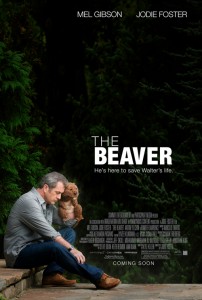
The Beaver
Review By: Dariel Figueroa
figueroadariel@gmail.com
Depression is a sickness that affects millions of people all across the globe. It’s a crippling ailment that can result in taped conversations filled with death threats, aggressive sexual demands, spurts of heavy, animal-like breathing episodes, and spittle laced phone receivers. Okay, maybe that’s not the actual symptoms, but you see what I’m getting at. The Beaver may or may not be an allegory for Mel Gibson’s recent troubles and it may or may not be Gibson’s comeback film (depending on who you ask there is no coming back from the kind of purgatory he’s relegated himself to). What The Beaver is, though, is one of the best films of the year.
Mel Gibson plays Walter Black, and when we meet him, he is already in a deep bout of depression, one that causes him to sleep at all times of the day. Unable to swat away his black cloud, Walter forgoes his family and professional responsibilities (he’s the top executive for a toy company) and soon enough, his wife Meredith (Jodie Foster taking on acting and directing duties), exiles him from their home so their two children no longer have to see their father slowly dissolve from society. During a booze fest in a hotel room one night, Walter tries to commit suicide, but is unsuccessful in his attempts. When he awakes from the bender, a small, beaver hand puppet, which he rescued from a dumpster earlier, suddenly finds a voice within Walter that begins goading him to put his life back together. The puppet, which Gibson voices with a Mad Max-era accent, becomes his mouthpiece, and not only does it speak to Walter, it speaks for him as well. Walter’s beaver (that sounds dirty) encompasses all the qualities he’s lost; it’s positive, motivated, creative, loving, and even fun to be around. Soon enough, Walter finds himself back on track with his company (a new toy inspired by the beaver becomes a best-seller) and even his family allows his reintegration. Not all is fine though, as Walter withdraws deeper inside himself to the point he never takes the puppet off, not even during intimate moments with his wife. The beaver has no evacuation plan and Walter eventually has to come to terms with his sickness.
The Beaver is a dark comedy/drama of sorts, a portrait of a man who has become complacent with his existence; it’s a grayscale, slippery slope that at first seems light hearted enough to warrant laughs, but as we jettison towards the opposite end of the spectrum, the humor strips away and we begin scraping the black tar underneath Walter’s soul, it’s a scary and ugly experience. When Walter achieves success with the help of the puppet, we know it is only a matter of time before he has to confront the demons
There is a nice layering of concepts within the screenplay, written by TV scribe Kyle Killen, as we see Walter’s son, Porter, experiencing some of the negative traits he shares with his father; traits like self-destructive habits and highly critical internal evaluations. The Beaver is a statement on the effects of depression but it also touches upon concepts like the value of success and the measurement of such things (are you successful because you have a big boat or because you take care of your family?), as well as the effects on the human psyche of not processing and understanding one’s past (we are never told of one event that caused Walter’s degradation, we assume it’s a culmination of things).
Of course everyone will want to know how Gibson’s performance was in this thing and there is only one word for it: fantastic. I’d be surprised if he was nominated for an award considering his love of all things Judaic (we all know how well The Passion of the Christ went over and that was when he was adored), but it’d be a real crying shame if he wasn’t given some sort of recognition for this, possibly his greatest performance to date. Gibson is brilliantly nuanced with his bleeding eye sadness and his ability to convert his smile to jagged expressions of grief, insecurity, and confusion (yes, all at once). When Walter finally reaches rock bottom, it is so heart rending and devastating that I immediately began scouring toy stores for a hand puppet to coax me back to happy land (I found one, but he was a duck and not nearly as motivating and positive as the beaver).
You could see this film for Killin’s nicely layered script, for Jodie Foster’s careful handling of the material, and even for the fine performances by Jennifer Laurence and Anton Yelchin. But, let’s be honest…you want to see Mel. You want to see him crash and burn and obliterate what’s left of his Hollywood career. Well, keep playing back those horrific phone conversations if you want that because if you see this film, you’ll only get one thing: a world class acting performance. Mel might not be back per se, but he sure as hell gave it his best shot.
Synopsis:
A troubled husband and executive adopts a beaver hand-puppet as his sole means of communicating.