


The Dawn of Digital and The Death of Film
Published on Apr 14th, 2009
Comments (2)

Written by Ryan Hamelin
RyanHamelin@TheCinemaSource.com

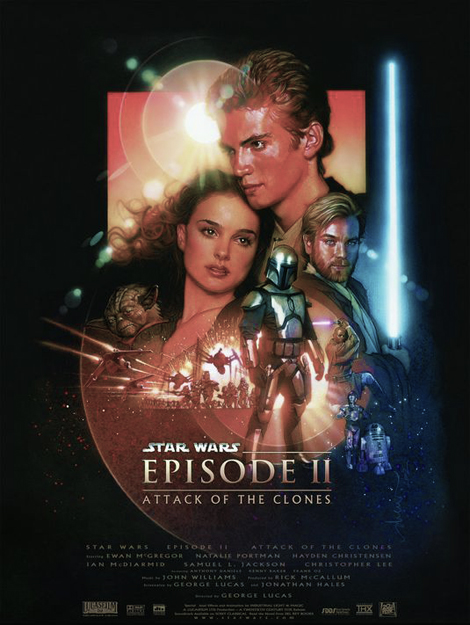
I’ve been meaning to write this article for a very long time. I think the beginnings of it came way back in 2002 when George Lucas announced that Star Wars Episode II would be shot entirely with digital cameras and even went so far as to threaten that the film would only play in theaters with digital projectors installed. People were shocked, awed, and dismayed by the apparent lack of reverence for the film format that these remarks expressed, and as Lucas would himself prove, special effects and their seamless integration into real performances are nothing without a good story and script to justify them.
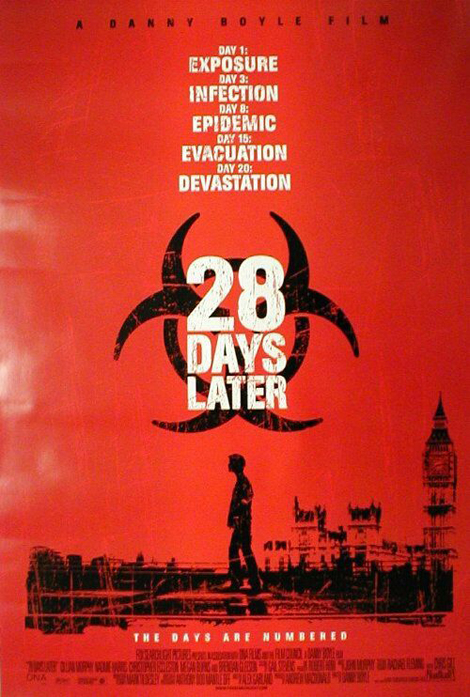
Also that year, a little film called 28 Days Later premiered somewhat under the radar. The zombie film became a huge sleeper hit, and many believed the cinematography to be a key part of its success. Few, if any, knew that the film was shot with a consumer grade digital camera… one with a 35mm adapter to be sure, yet a modestly priced all-digital film none the less.
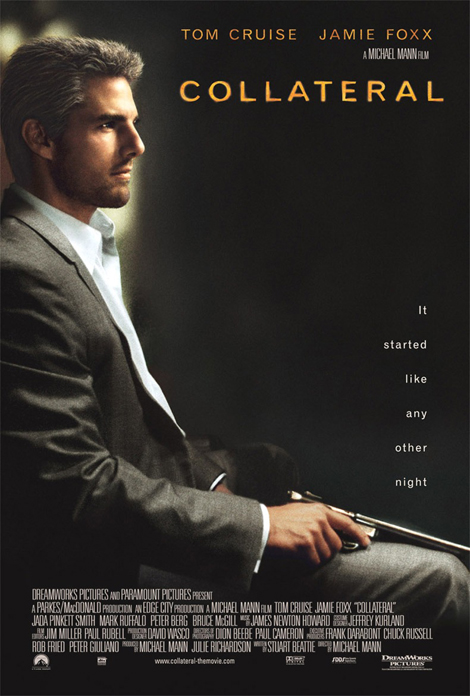
In 2004, Michael Mann used a Viper FilmStream High Definition Camera to film Collateral, a production which used low-light situations as an asset, and was able to capture the night sky of Los Angeles like no other film before it. It was the first true Hollywood drama to employ the technology which had been reserved for high grade special effects photography and music videos until that point, and it was only the beginning.
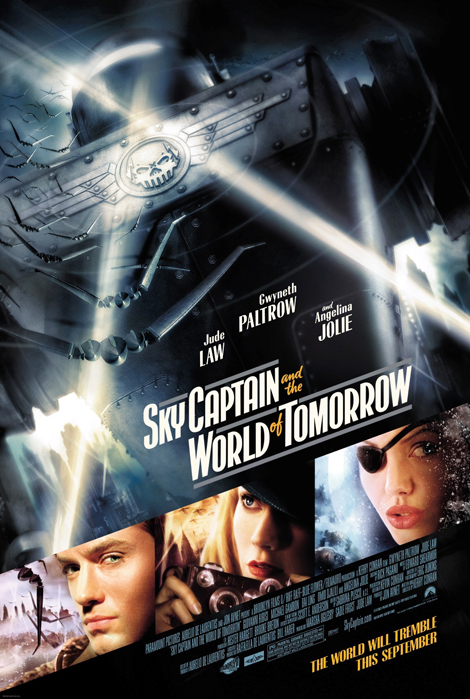
Also in 2004, Sky Captain and the World of Tomorrow introduced the world to completely green-screen filmmaking on a scale which dwarfed even the Star Wars prequels. Actors with no sets, no props, no locations, and often no enemies, filmed for days inside a green box. The lack of sets saved money as well as making the film visually unique, and the process was deemed a rousing success despite the poor box office performance.
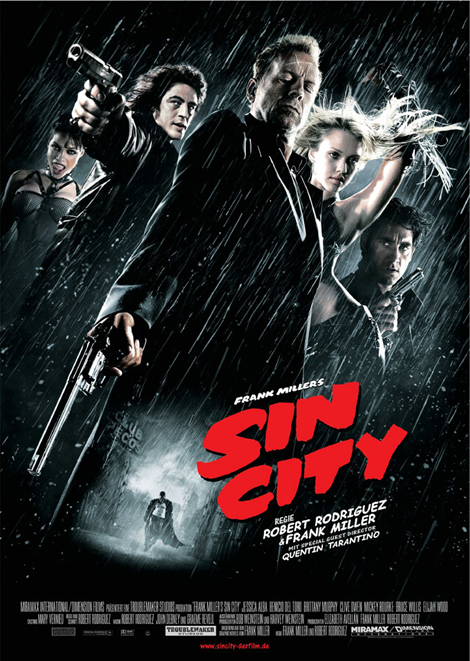
Robert Rodriguez, who had been using digital filmmaking techniques since Spy Kids hit the format out of the park with 2005′s Sin City, a movie that so closely resembled the comic upon which it was based that it broke the conventions of what a film adaptation could be. The sequel has been scripted and will most likely begin filming soon, so we will see how far they are able to push the genre with A Dame to Kill For.
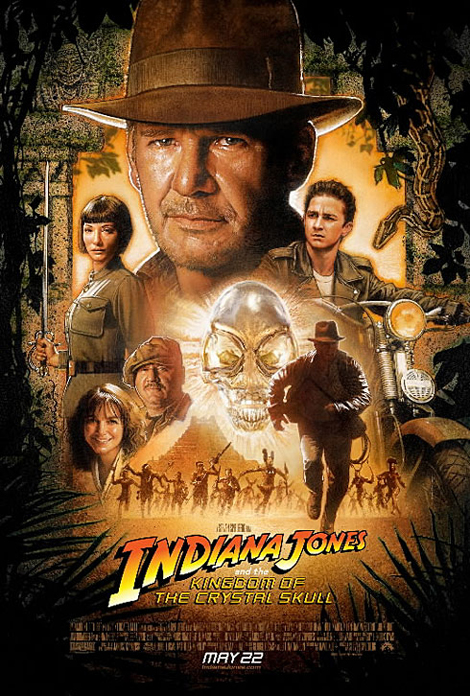
I know, I know, so you’re all saying “So what?” Despite even Lucas’ best efforts, the newest Indiana Jones film was shot on good old 35mm (Spielberg is well known for his undying love for the format). Green screen films are still not very commonplace, as they haven’t really been used to reproduce real life in any meaningful way. People will still be using 16mm until the end of time right? Well, here’s where RED comes in.
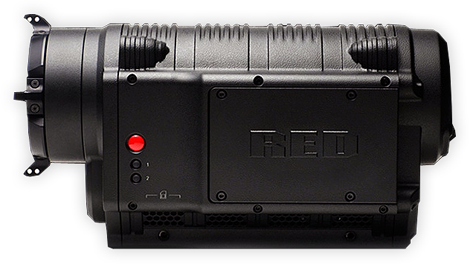
A camera known lovingly (or not so lovingly) as the RED ONE, was released in 2007. It could accommodate 4520 x 2540 active pixels and the body cost around $17,000. Lenses and other equipment were obviously extra, but you could get a really great set up for around $25,000-$30,000. It could get up to what the digital industry calls “4K resolution” which is, theoretically, the same quality as a 35mm print were it converted into pixels. With 35mm cameras costing upwards of $60,000, not even counting film stock and processing costs, the new camera was a revelation. But that was only the beginning.
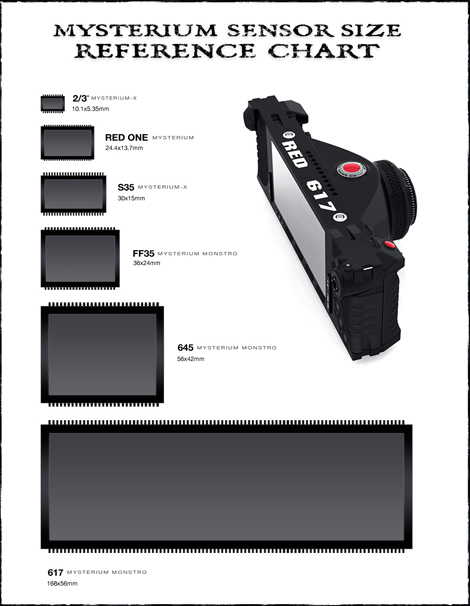
On December 3rd, 2008, RED dropped the atomic bomb. They announced new SCARLETT and EPIC models. The SCARLETT being the more consumer based camera, capable of a wide range of qualities and features starting at $2,500 dollars… getting up to 4K for a grand total of $7,000 not counting lenses etc. The EPIC, by contrast, gets up to a staggering 28K resolution. IMAX is filmed on 70mm film stock, that’s considered equivalent with 8K. We’re talking over 3 times the size of IMAX quality. That is truly RIDICULOUS resolution. That’s the entire side of a building with each brick having the depth and resolution of a flat screen TV. Unfathomable quality. Like the Star Wars example earlier, there will still have to be stories worth telling and places worth photographing, but the technology has finally arrived to make people’s dreams a reality.
The point is that it’s all CHEAP, relatively speaking. You don’t have to pay for film, for processing, or for any storage other than an external hard drive. You can keep shooting the same thing for a whole day, or leave the camera rolling at all times without added expense or headache. Even with every overpriced accessory available, the rig would still be cheaper than a 35mm camera, and we’re talking even higher quality than traditional film, available for the first time to a consumer level production.
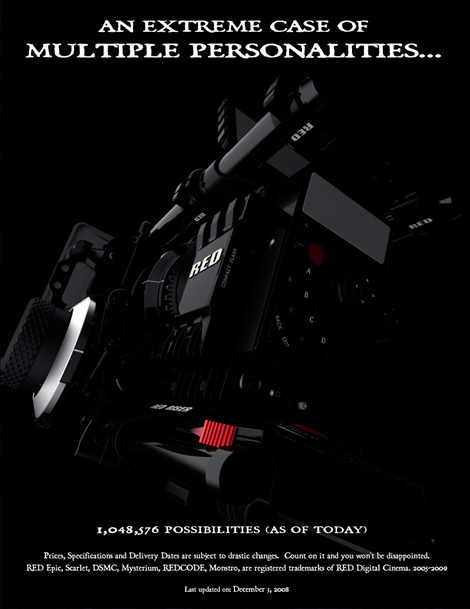
Independent film will change first. Every self-financed film shoot that could afford 35mm will go RED to cut costs and angle production budgets into other areas. The whole of independent cinema will be completely digital, probably in the next 3-4 years. Students will begin to learn and train on RED technology, and a whole new generation of film students will carry their knowledge of digital photography into Hollywood. Soon, the only thing anyone will know how to use and light for will be digital cameras, and the transition will make big-budgeted movies faster, cheaper, and higher quality.
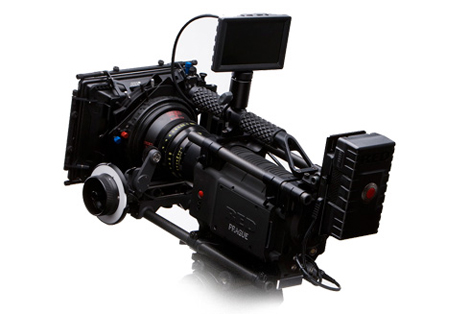
The death of film is a foregone conclusion, and several major Hollywood productions have already started to film on RED including recent projects like Jumper, Knowing, and Che. But the reason I wrote this article today, the reason I finally had to show what was possible with the new format, was because of a movie I’m not actually even all that excited about. Apple just released an exclusive look at Angels and Demons, a clip which is focused primarily on the musical score. We have our shitty quality flash encode of it below, but I also included the links to the high resolution versions. The reason is: Angels and Demons was shot on the RED and the image quality is mind-blowing. I have never seen digital look this good, no matter what the project, and this, more than anything else, is all the proof I need to assert that film is truly dead and gone. It may take a few years, but the end is certainly nigh for the once dominant format.
Do yourself a favor and check out the HD links instead
–480p– –720p– –1080p–
____
Hey! Fan us on Facebook or follow us on Twitter for more great reviews, interviews, videos and much, much more!